 Klemio
Tokyo Skytree
A 634 meter broadcasting tower on the east side of the city, with two decks reached by fast elevators: the lower one wraps around at 350 meters, the higher one climbs to 450. Tickets are timed. The payoff is weather-dependent, and on a genuinely clear day the view runs all the way out to Mount Fuji.
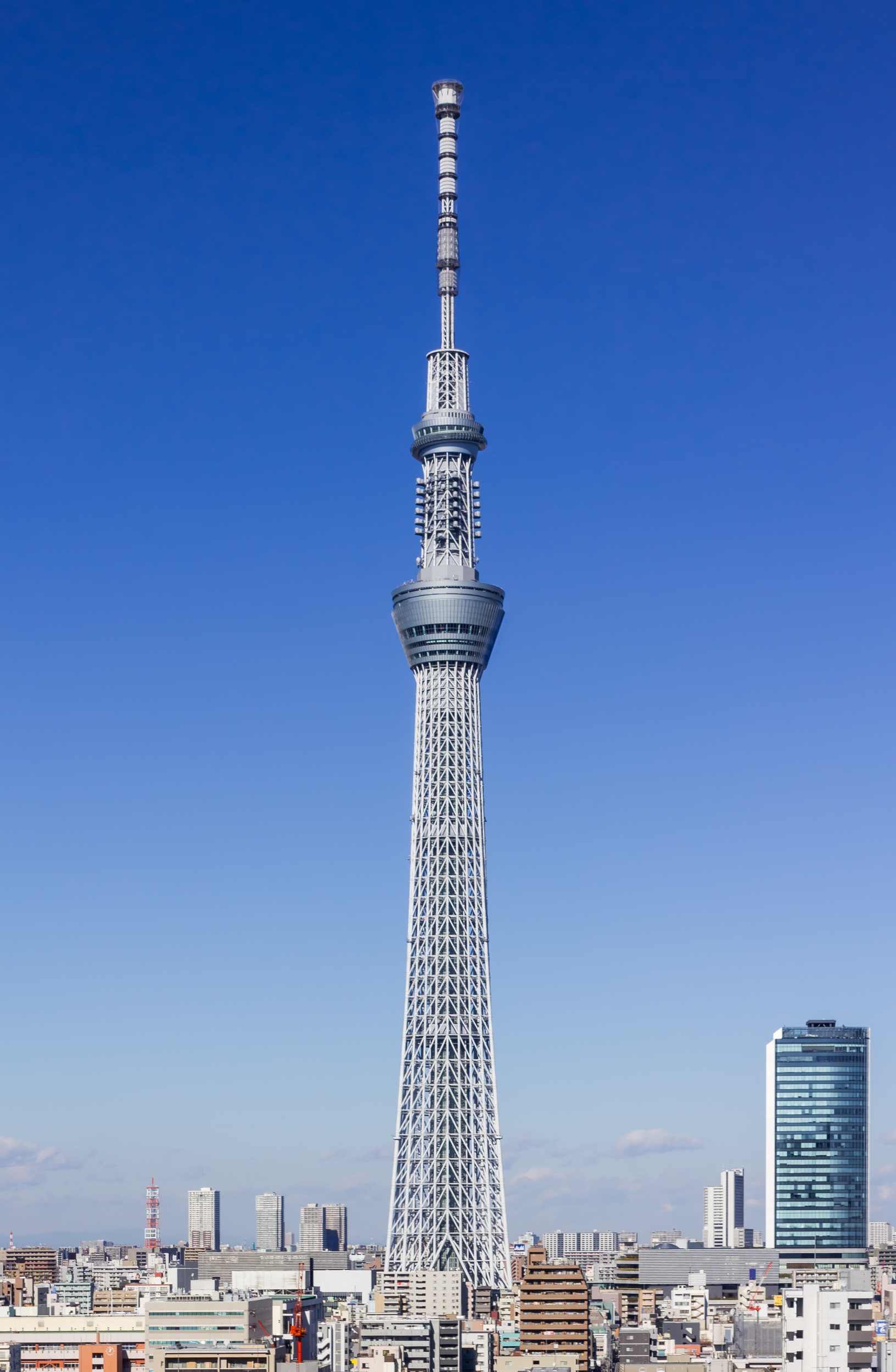
Photos: Basile Morin (CC BY-SA 4.0), Basile Morin (CC BY-SA 4.0), Balon Greyjoy (CC0), via Wikimedia Commons
Worth it if a vast high-up view of Tokyo is what you want and the sky is clear. It is the tallest tower in Japan and it delivers, but it is paid and often busy, so book a timed slot and pick a clear day. On haze or cloud, save your money.
Worth it for
- Far-reaching views over the whole Tokyo sprawl, with Fuji on a clear day
- Observation-tower fans who want the tallest one in the country
- Tacking on the shops, aquarium, and restaurants in the Solamachi complex at the base
You can skip if
- The day is hazy, cloudy, or wet and visibility will be poor
- A free skyline view elsewhere is good enough for you
Tickets & tours for Tokyo Skytree
Which ticket should you buy?
The observation decks
There are two levels. The Tembo Deck at 350 meters is the main viewing floor, a wide glass walled ring that looks out over the whole sprawl of Tokyo, with a section of glass floor where you can stand and look straight down. From here you can buy a separate ticket up to the Tembo Galleria, a sloping walkway that climbs toward 450 meters.
On a clear day the view reaches across the city to the mountains, and Mount Fuji is sometimes visible on the western horizon. Because the tower stands apart from other tall buildings, the panorama is open in every direction, which sets it apart from observation decks hemmed in by neighbors.
Tickets and timing
Entry uses timed slots, and booking online in advance lets you pick a time and skip the ticket line at the base. During busy seasons and on clear weekends, slots can sell out, so reserving ahead is the safe move. You buy the higher Galleria ticket either with your entry or once you are on the lower deck.
For the best experience, aim for a clear day, since haze and clouds can flatten the view. A slot in the late afternoon lets you see the city in daylight and then watch it light up as the sun goes down, which is the payoff many visitors come for.
At the base
The tower sits on top of a large shopping and dining complex, so there is plenty to do without going up. The complex holds shops, restaurants, an aquarium, and a planetarium, which makes it a workable rainy day stop or a place to wait out your timed slot.
Because the whole site is built around a station, getting in and out is simple, and you can fold a visit into a wider day in eastern Tokyo rather than treating it as a destination on its own.
Nearby
Asakusa and Senso-ji are just across the Sumida River, a short walk or one train stop away, so pairing the temple with the tower makes for an easy half day that contrasts old and new Tokyo. The riverside between them has a walking path and boat piers.
Water buses run on the Sumida River, and from Asakusa you can take a boat down toward the bay, which is a relaxed way to see another side of the city after coming down from the deck.
Tokyo Skytree: FAQs
It stands 634 meters, making it the tallest structure in Japan. The two observation decks sit at 350 meters and 450 meters, both reached by fast elevators from the base.
Booking ahead is recommended. Entry uses timed slots, and reserving online lets you choose a time and skip the ticket line. Slots can sell out on clear weekends and in busy seasons.
Use Tokyo Skytree Station on the Tobu Skytree Line, or Oshiage Station, served by the Tokyo Metro Hanzomon Line, the Toei Asakusa Line, and the Keisei line. Both are right at the base.
Pick a clear day, since haze hides the view. A late afternoon slot lets you see the city in daylight and then watch it light up at dusk, which many visitors find the highlight.
The decks are generally open from morning until late evening daily, with last admission around an hour before closing. Booking a timed slot fixes your entry window, so check the time on your ticket.
Explore more in Tokyo
Plan your trip
- Best time to visit Tokyo
- Day trips from Tokyo
- 3 Days in Tokyo: A Realistic First-Timer Itinerary
- Free Things to Do in Tokyo You Won't Feel Cheated By
- Tokyo with Kids: Robots, Trains, and Quiet Wins
- Tokyo After Dark: Where to Go at Night
- Tokyo When It Rains: Indoor Plans That Don't Feel Like Settling
- Tokyo Skytree vs Shibuya Sky: Which Tokyo View Is Worth It?
Where to next?
One short email, twice a month: handpicked experiences, hidden-gem cities, and the best windows to book them.