 Klemio
Things to do in Madrid
Madrid runs on its own clock. It's a high plateau city of grand plazas and gold-lit stone, where the day doesn't really get going until evening, dinner starts when other countries are asleep, and three of the best art museums in the world sit within a short walk of each other. This guide covers when to go, how to get around, the neighborhoods worth your time, how to plan your days around the free museum windows, and the day trips that earn an extra night.

The essential things to do in Madrid
-
1. Museo del Prado.
The big one for Spanish painting: Velázquez, Goya, El Greco, and Bosch's Garden of Earthly Delights, free for roughly the last two hours before closing if you don't mind a queue.
-
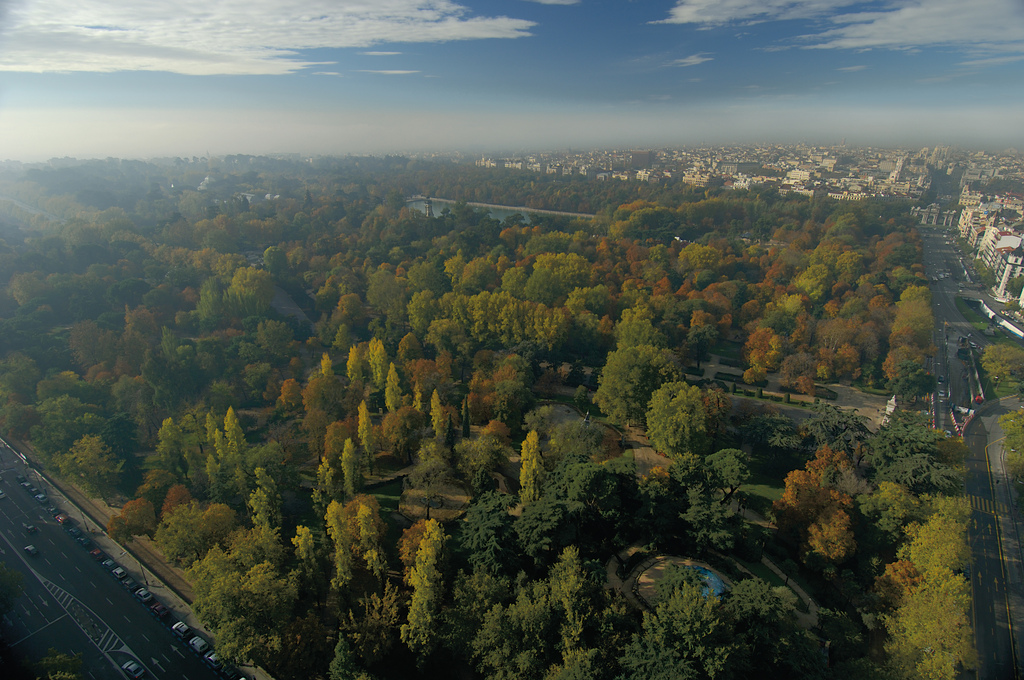
The city's green lung, with a rowboat lake, the glass Crystal Palace, and shaded paths that locals fill on weekend afternoons; go early on a summer morning before the heat.
-
A huge, over-the-top official palace you can tour inside; book a timed slot online, and check the day you visit since it closes for state events.
-
4. Plaza Mayor and Mercado de San Miguel.
The grand arcaded square is worth a loop, but eat at the nearby San Miguel market only if you accept it's a pricey tourist hall; the tapas a few streets over are better value.
-
5. Reina Sofía.
Home to Picasso's Guernica plus strong modern and contemporary collections, free most evenings and closed Tuesdays, so check before you go.
-
6. Templo de Debod.
A real ancient Egyptian temple gifted to Spain, set in a park west of the center, and the go-to spot to watch the sun drop behind the mountains.
-
Real Madrid's stadium runs a tour through the locker rooms, pitchside, and trophy room; book ahead, and aim for a non-matchday since the tour route changes around games.
-
8. Barrio de las Letras tapas crawl.
Skip a sit-down dinner one night and graze the literary quarter's bars between Sol and the Prado, ordering a drink and a small plate at each stop.
Landmark guides for Madrid




Plan your trip to Madrid
Thumbnail photos by Emilio J. Rodríguez Posada (CC BY-SA 2.0), Tim Adams (CC BY-SA 4.0), Ввласенко (CC BY-SA 3.0), Max Alexander / PromoMadrid (CC BY-SA 2.0), Jorge Franganillo (CC BY 2.0), Fernando (CC BY-SA 4.0), https://www.flickr.com/photos/jiuguangw (CC BY-SA 2.0), Tomás Fano (CC BY-SA 2.0), MottaW (CC BY 4.0), Kyle Magnuson from Los Angeles, United States (CC BY 2.0), via Wikimedia Commons.
Why visit Madrid
Madrid doesn't sell itself on a single skyline shot the way Barcelona or Paris does, and that's part of the appeal. The pleasure here is the rhythm: long lunches, late dinners, a city that pours out onto terraces in the evening and treats going out as the main event rather than an afterthought. It rewards people who slow down and eat on local time instead of trying to tick boxes.
The art alone justifies the trip. The Prado, Reina Sofía, and Thyssen sit close together in what people call the Golden Triangle, and between them you get centuries of Spanish painting, Guernica, and a private collection that fills the gaps. You could spend two days just on those three and not feel shortchanged.
Add the food, the parks, the easy day trips to medieval towns half an hour out by fast train, and a center that's flat and walkable, and Madrid works for a long weekend or a full week. It's less postcard-pretty than some Spanish cities, but it's a place people end up loving for how it feels to actually be there.
When to visit
Spring (April to June) and fall (mid-September to October) are the clear winners. You get warm days, cool evenings, and the city living outdoors at cafe terraces and in Retiro. If you have flexibility, aim here.
Summer is the real tradeoff. July and August get genuinely hot, often into the high 30s Celsius (mid-90s Fahrenheit and up), and a lot of locals clear out, so some smaller restaurants and shops shut for August. The upside is long evenings, rooftop bars, and outdoor culture nights. If you come in summer, do your sightseeing in the morning, hide indoors through the midday heat, and come back to life after dark like everyone else. Because Madrid sits high and dry, the nights cool off more than you'd expect, which helps.
Winter (December to February) is cold and can turn properly chilly at night, with the odd snow, but it's low season. Museums are calmer and the Christmas lights and markets draw a crowd. Two stretches to think twice about: peak August heat, and Semana Santa (Easter week), when crowds spike. Skip both unless that's specifically what you came for.
Getting around
Honestly, you'll walk most of central Madrid. It's compact and flat, and the main sights cluster together. For everything else, the Metro is the workhorse and one of the better systems in Europe: clean, frequent, and far-reaching, running from roughly 6 a.m. to about 1:30 a.m. You'll need a refillable Multi card (a small one-time fee for the plastic at any machine), then load single rides or a 10-trip ticket onto it. A Multi card loaded with single rides or a 10-trip ticket can actually be shared by a group on the same journey: just tap it once per person at the gate, as long as everyone starts and travels together. The Tourist Travel Pass, by contrast, is personal and non-transferable.
There's a flat-fare Tourist Travel Pass (Abono Turístico) for 1 to 7 days covering metro, city buses, and Cercanías trains in the central zone. It only pays off if you're riding a lot each day, so do the math against single tickets first. EMT buses reach the gaps the metro misses and run night buho routes when the metro closes. The Cercanías commuter rail is the quick link between Atocha and Chamartín and the way out to several day-trip towns.
Taxis are metered and reasonable, and Uber, Bolt, and Cabify all work. Watch the airport specifically: from Barajas you've got a metro line (with a supplement added to your fare), the Cercanías C-1 train, and the 24-hour Expres Aeropuerto bus to Atocha. Any of them works; the bus is handy for late or early flights when other options thin out.
What to do, by type of trip
Art and culture first-timers should build around the Golden Triangle. Give the Prado a half day, the Reina Sofia a couple of hours for Guernica and the modern rooms, and the Thyssen if you want the full sweep of European painting. Pace it so you're not staring at masterpieces on tired feet; one big museum a day is plenty, with a long lunch in between.
If you're here to eat and drink, this is a great city for it. Do a tapas crawl through La Latina (best on a Sunday around the El Rastro flea market) or the Barrio de las Letras, ordering a drink and one small plate per bar and moving on. Visit Mercado de San Miguel once for the look of it, but know it's a pricey tourist hall; the better, cheaper bites are on the surrounding streets. Eat on Spanish time and you'll have company.
Football fans should book the Bernabeu tour, ideally on a non-matchday. Travelers with kids or anyone who wants to slow down should lean on Retiro, the Templo de Debod at sunset, and easy day trips. And if you came for nightlife, Malasana and Chueca are your neighborhoods, with the caveat that things genuinely don't get busy until very late.
How to plan your days
Plan around the free museum windows, because they're real and they save money. The Prado is free for roughly the last two hours before closing (about 6 to 8 p.m. on weekdays, shorter on Sundays), the Reina Sofia is free in the evenings most days and closed Tuesdays, and the Thyssen has a free window on Mondays. The catch: free hours draw long lines, so if your time matters more than the ticket price, just buy a timed slot and walk in.
A clean two-day skeleton: day one for the Prado and Retiro next door, then a tapas crawl in the Letras quarter; day two for the Royal Palace and Almudena Cathedral in the morning, Plaza Mayor and the San Miguel area for a look, and the Reina Sofia or Templo de Debod in the late afternoon. With a third or fourth day, add a day trip and a second neighborhood like Malasana or Salamanca.
Build the Spanish clock into your plan. Lunch runs roughly 2 to 4 p.m. and dinner often doesn't start before 9 p.m., so either adjust your hunger clock or bridge the gap with tapas. Many sights and smaller shops still take a long midday break, and August closures are common, so check hours the day you go rather than assuming.
Booking tips and common mistakes
Book the big-ticket sights online with a time slot: the Prado, Reina Sofia, and especially the Royal Palace and the Bernabeu tour. The Royal Palace also has reduced or free late hours for EU citizens and closes for state events, so confirm the specific day. Buying ahead is the single easiest way to skip the ticket queue.
Pickpocketing is the main hassle here, not violent crime. Stay alert on the metro (Line 1, Sol, and Gran Via stations), in Puerta del Sol, and around the El Rastro market. Two scams to know: someone pressing a rosemary sprig into your hand near touristy plazas as a 'gift' and then demanding money, and the fake-petition clipboard used to crowd and distract you. A hand on your bag and a polite no keeps both from working.
A few more things people get wrong. Tipping is modest, not American-style: round up or leave a euro or two, that's it. Don't expect dinner at 7; you'll be eating alone. And there's no city dress code, but cover shoulders and knees if you want to enter churches like the Almudena. Get those right and Madrid is an easy, forgiving city to travel in.
Where to stay and explore: Madrid's neighborhoods
- Centro (Sol and Gran Via)
- The tourist core around Puerta del Sol, with the theaters and shops of Gran Via and easy walking to most sights; busy and a bit touristy, but you can't beat the location.
- La Latina
- Old Madrid's tapas heartland, at its best on Sunday when the El Rastro flea market spills through the streets; come hungry and plan to graze.
- Malasana
- The scruffy-cool former hub of the 1980s Movida, now full of indie cafes, vintage shops, and a young going-out crowd that keeps it loud late.
- Chueca
- Madrid's gay neighborhood and nightlife center, with boutiques, brunch spots, and the city's biggest Pride in late June or early July.
- Barrio de las Letras (Huertas)
- The literary quarter where Cervantes and Lope de Vega lived, now a walkable strip of tapas bars between Sol and the Prado; ideal for an evening crawl.
- Salamanca
- The upscale grid for luxury shopping along Calle Serrano, plus quieter, elegant streets and good restaurants if you want a calmer base.
- Lavapies
- The most multicultural part of the center, with cheap eats from around the world, street art, and a grittier edge; great food, lower polish.
- Chamberi
- A leafy, residential middle-class district just north of the center, good for a more local feel and the ghost-station museum at Estacion de Chamberi.
Things to do in Madrid: FAQs
Two full days cover the headline museums and the main squares. Three or four lets you slow down, add a neighborhood or two, and take a day trip to Toledo or Segovia, which is where Madrid really opens up.
It's more affordable than Paris or London. Tapas and menus del dia keep eating cheap if you avoid the obvious tourist spots, the metro is inexpensive, and several top museums have free evening windows. Salamanca shopping and rooftop bars are where it gets pricey.
From Barajas you have three solid options: a metro line (with a supplement added to your fare), the Cercanias C-1 train, and the 24-hour Expres Aeropuerto bus to Atocha. The bus is the easy pick for very late or early flights; the train and metro are quicker into the center during the day.
That's just the Spanish clock. Lunch is the big meal around 2 to 4 p.m., and dinner often doesn't start until 9 p.m. or later. If you can't wait, bridge the gap with tapas in the early evening, which is what a lot of people do anyway.
The Prado is free for roughly its last two hours before closing, the Reina Sofia in the evenings most days (closed Tuesdays), and the Thyssen on Mondays. The trade is long lines during those windows. If your time is tight, just book a timed ticket and skip the queue.
Yes, for the most part; violent crime is rare and the real risk is pickpocketing. Stay alert on the metro, in Puerta del Sol, and around El Rastro, and brush off the rosemary-sprig and clipboard-petition scams near tourist plazas. Keep your bag zipped and in front of you and you'll be fine.
Explore more destinations
- Things to do in Vienna Austria
- Things to do in Prague Czech Republic
- Things to do in London England
- Things to do in Paris France
- Things to do in Berlin Germany
- Things to do in Athens Greece
- Things to do in Naxos Greece
- Things to do in Budapest Hungary
- Things to do in Dublin Ireland
- Things to do in Florence Italy
- Things to do in Rome Italy
- Things to do in Venice Italy
- Things to do in Tokyo Japan
- Things to do in Amsterdam Netherlands
- Things to do in Lisbon Portugal
- Things to do in Porto Portugal
- Things to do in Barcelona Spain
- Things to do in Dubai United Arab Emirates
- Things to do in Las Vegas USA
- Things to do in New York City USA
Where to next?
One short email, twice a month: handpicked experiences, hidden-gem cities, and the best windows to book them.