 Klemio
Things to do in Athens
Athens is an old city with a hard glare to it, where 2,500-year-old marble sits a block from souvlaki counters, and the Acropolis floats over the rooftops from almost every angle. It is louder, grittier, and more lived-in than the postcards let on, and that is the point. This guide covers when to go, how to get around, the neighborhoods worth your time, how to plan your days, and the day trips that earn an extra night.

The essential things to do in Athens
-
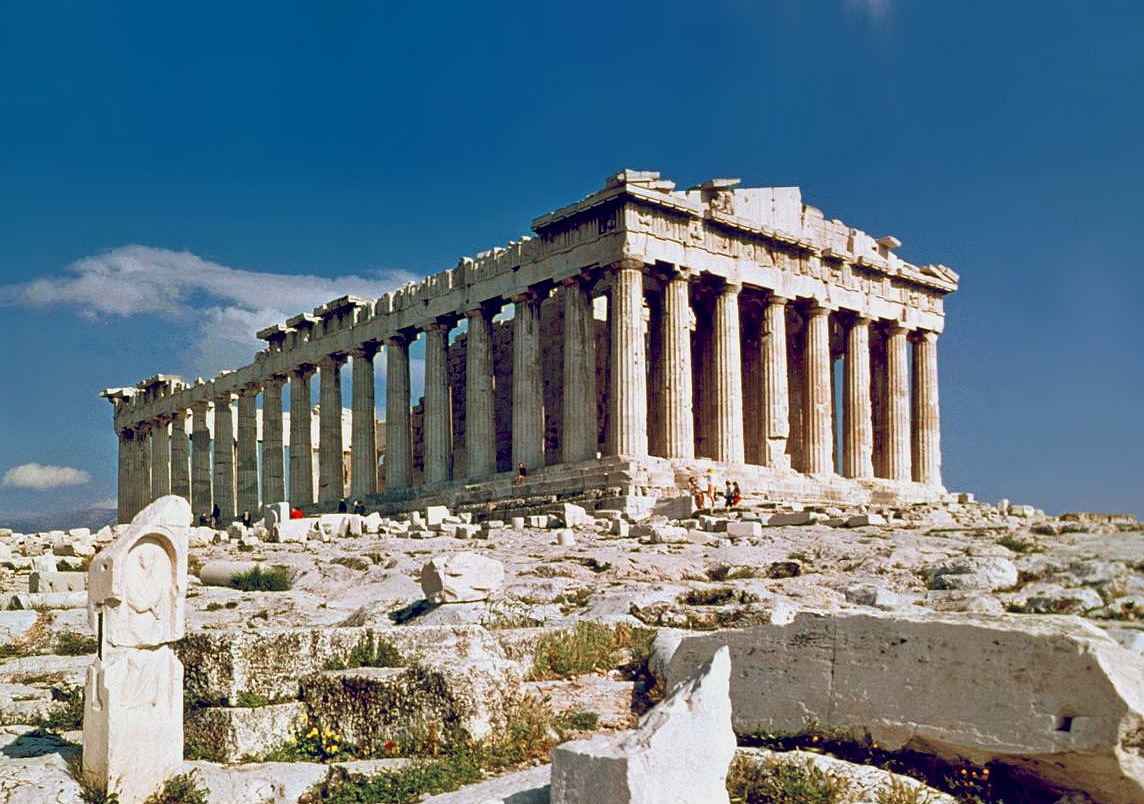
1. The Acropolis.
The reason you came: climb the rock at opening or in the last couple of hours before close, because midday there is almost no shade and the cruise crowds pile in.
-
2. Acropolis Museum.
The modern museum at the foot of the hill, with glass floors over excavated ruins and the Parthenon marbles displayed in natural light; pair it with the site, not against it.
-
The old civic center where Socrates argued and democracy got tested, with the well-preserved Temple of Hephaestus standing nearly intact at the top.
-
4. National Archaeological Museum.
Up near Exarcheia, this is the heavyweight: Mycenaean gold, bronze statues pulled from shipwrecks, and the Antikythera mechanism, worth a half day on its own.
-
The all-marble stadium that hosted the first modern Olympics in 1896; you can walk the track and climb the stands for a wide view back toward the Acropolis.
-
6. Mount Lycabettus.
The tallest hill in central Athens, reached on foot or a funicular, best at sunset when the whole city and the Acropolis light up below you.
-
A handful of giant columns left from what was once a colossal temple, right by Hadrian's Arch and usually included on the combined ticket.
-
8. Roman Agora and Tower of the Winds.
The later Roman marketplace next to the Greek Agora, with an octagonal marble tower that worked as a sundial, water clock, and weathervane all at once.
Landmark guides for Athens




Plan your trip to Athens
Thumbnail photos by Giles Laurent (CC BY-SA 4.0), Jebulon (CC0), Steve Swayne (CC BY 2.0), Jean-Pierre Dalbéra from Paris, France (CC BY 2.0), Chabe01 (CC BY-SA 4.0), Mister No (CC BY 3.0), Thomas Wolf, www.foto-tw.de (CC BY-SA 3.0 de), Apaleutos25 (CC BY-SA 4.0), Robert Freeman (CC BY-SA 3.0), Carole Raddato from FRANKFURT, Germany (CC BY-SA 2.0), via Wikimedia Commons.
Why Athens is worth it
Athens gets a bad rap as a one-day layover before the islands, and that is a mistake. Yes, the city is concrete-heavy and the traffic is loud, but the density of real ancient stuff here is hard to match anywhere. You can stand in the Agora where democracy was actually argued into being, then walk ten minutes to a museum holding gold masks older than the Parthenon. The history is not staged for you. It is just there, woven into a working modern city.
The other thing people underestimate is the food and the street life. The tavernas in Pangrati and Koukaki, the mezze bars in Psyrri, the souvlaki stalls around Monastiraki: this is a city that eats late and well, and cheaply by Western European standards. Sit down for a long dinner and you will get why locals love it.
Give it two or three full days. One for the Acropolis and the classical core, one for the big museum and a neighborhood or two, and a third for a day trip to the coast or the mountains. Athens rewards people who slow down and stop treating it as a transit hub.
When to visit
Spring (April to early June) and fall (September to October) are the sweet spots. Warm days, cool evenings, and the ancient sites are actually pleasant to walk. If you have a choice, aim for one of those windows and you will skip the worst of both the heat and the crowds.
Summer is the tradeoff most people get wrong. July and August are genuinely hot, often well into the 90s Fahrenheit, and the Acropolis has almost no shade. Add peak cruise-and-tour crowds and the midday climb turns miserable. In the worst recent heat waves the site has closed for the hottest afternoon hours. If you come in summer, go right at opening or in the last couple of hours before close, and carry water.
Winter (November through March) is the quietest and cheapest stretch. Expect mild but rainy spells and short daylight. It is a fine time to visit if you do not mind the odd gray day, and the museums make great refuges. One bonus: from November through March, state sites including the Acropolis give free entry on the first and third Sunday of the month. That draws its own crowd, so weigh it.
Getting around
The metro is the easy part of Athens. Three lines (M1 green, M2 red, M3 blue) that are clean, cheap, and air-conditioned, which genuinely matters in summer. Most of the big sights cluster around a handful of central stops: Acropoli, Monastiraki, Syntagma, and Thissio. You can walk between the Acropolis, the two Agoras, and Plaka without ever boarding a train. The M3 blue line runs straight from the airport to Syntagma in about 40 minutes, which is the no-stress way in from your flight.
Buy a paper ticket or the reloadable Ath.ena card at machines in any station. A single ticket covers 90 minutes with transfers across metro, bus, tram, and suburban rail, and there are 24-hour and multi-day passes if you plan to ride a lot. Validate before you board or you risk a fine. There is also a tram toward the coast and a dense bus and trolley network, but a casual visitor rarely needs either.
Cabs and Uber (which dispatches regular taxis here) are cheap by Western European standards and worth it late at night or for the climb up toward Lycabettus. Honestly, though, the historic core is small and built for walking. Just bring real shoes, because the marble paths and hills are slick and steep, and flip-flops will betray you on the polished stone.
What to do, by type of trip
First-timer here for the classics: do the Acropolis early, then the Acropolis Museum, the Ancient Agora, and the Roman Agora, all walkable from each other. Add the National Archaeological Museum on a separate day. That is the spine of the city and it is genuinely great.
History and ruins obsessive: there is no longer an official city-wide combined ticket, so you now buy each site separately. The Temple of Olympian Zeus, Hadrian's Library, and the smaller sites each have their own admission, and the cost adds up once you start hitting several. Then push out to Delphi or pair Mycenae and Epidaurus from Nafplio. This is where Athens really delivers, because the day trips are some of the best ancient sites in the world.
Food, bars, and just hanging out: skip a museum and spend the time in Psyrri for mezze and bars, Pangrati and Koukaki for low-key tavernas, and Kolonaki for cafes and people-watching. Climb Lycabettus at sunset, then eat late like the locals do. A first trip does not have to be all ruins, and Athens is a better hangout city than most visitors expect.
How to plan your days
Two days minimum, three if you can. Day one: hit the Acropolis right at opening before the heat and the tour buses, then come down to the Acropolis Museum and the Agoras in the afternoon, finishing with dinner in Plaka or Koukaki. Front-loading the Acropolis is the single best scheduling decision you can make.
Day two: the National Archaeological Museum in the morning when you are fresh, since it is large and dense, then spend the afternoon wandering a neighborhood or two on foot. Monastiraki and Psyrri flow into each other, and Kolonaki plus a Lycabettus sunset makes a strong close. Keep the pace loose; you do not need to see everything.
Day three is for getting out of town. Cape Sounion for a sunset half-day is the lowest-effort option. Delphi or the Nafplio loop (Mycenae and Epidaurus) is a fuller day. If Meteora is the dream, treat it as an overnight rather than cramming it into a brutal there-and-back. Build in a slow lunch somewhere; Athens is not a city to speed-run.
Booking tips and common mistakes
Book a timed Acropolis entry slot online in advance for summer and shoulder season. The gate caps numbers, the morning slots sell out first, and you will want the QR code ready on your phone. The old official combo ticket that bundled the Acropolis with the Ancient Agora, Roman Agora, Hadrian's Library, the Temple of Olympian Zeus, and a couple of other sites was scrapped in 2025, so each site is now its own separate ticket. Some private operators sell their own multi-site passes, so compare those against buying individually if you plan to see several. Note that the genuine free-entry days (a handful of fixed dates like March 6 and October 28, plus the first and third Sunday of the month from November to March) pull big crowds and disable online booking, so they are a tradeoff, not a hack. Check the current list when you plan, and note the Acropolis is actually closed on some national holidays such as March 25 rather than free.
Footing and heat are the underrated mistakes. There is almost no shade on the Acropolis, and the marble underfoot is genuinely slippery, polished smooth by millions of feet. Wear shoes with grip and skip the flip-flops. The ancient sites have no dress code, but if you also visit churches or monasteries (especially on a Meteora trip) cover shoulders and knees.
Watch the scams. The classic one is the friendly stranger near Syntagma or Monastiraki who invites you to a bar and leaves you with a wildly inflated bill. Keep an eye out for pickpockets on the crowded M3 metro to and from the airport, and for taxi drivers who claim the meter is broken; insist on the meter or just use the app. Tipping is modest, so round up or leave a euro or two. The tap water is safe to drink, so skip the bottled stuff.
Where to stay and explore: Athens's neighborhoods
- Plaka
- The old quarter right under the Acropolis, all narrow lanes and tavernas; pretty but the most touristy in town, so the prices climb.
- Monastiraki
- Flea-market square and souvlaki stalls where the metro lines cross; loud and central, a solid base if you want everything walkable.
- Anafiotika
- A tiny pocket of whitewashed Cycladic houses built into the Acropolis slope above Plaka; it feels like an island village and is easy to miss, so look for it.
- Kolonaki
- The upscale district below Lycabettus, with designer shops, cafes, and galleries; quieter and more local-money than the tourist core.
- Psyrri
- Gritty-turned-trendy streets of bars, mezze spots, and street art just north of Monastiraki; this is the nightlife center.
- Koukaki
- Residential and walkable, just south of the Acropolis Museum; a favorite for apartment stays and neighborhood tavernas without the crowds.
- Exarcheia
- The anarchist and student quarter, full of political murals, record shops, and cheap eats; edgier reputation but fine by day and handy for the National Archaeological Museum.
- Pangrati
- Leafy and lived-in, east of the center around the Panathenaic Stadium; some of the best low-key restaurants in the city and a genuinely local feel.
Things to do in Athens: FAQs
Two full days covers the Acropolis, the Agoras, the Acropolis Museum, and a neighborhood or two. Add a third day for a day trip to Cape Sounion, Delphi, or Nafplio. Most people who treat Athens as a single layover regret it.
For summer and shoulder season, yes. The gate caps the number of visitors and the morning slots sell out first, so get a timed entry slot online and have the QR code ready. In quiet winter months you can usually walk up, but booking still saves you the line.
Spring (April to early June) and fall (September to October) are ideal: warm days, cool evenings, and walkable sites. Summer is hot, often well into the 90s Fahrenheit, with no shade on the Acropolis and peak crowds, so go at opening or near close if you come then. Winter is quiet, cheap, and occasionally rainy.
The M3 blue metro line runs straight to Syntagma in about 40 minutes and is the easiest, cheapest option. A taxi or Uber works too and is reasonable by Western European standards, but watch for drivers who claim the meter is broken; insist on the meter or use the app.
The historic core is small and made for walking. The Acropolis, the two Agoras, Plaka, and Monastiraki are all within strolling distance. Use the metro for the airport, the National Archaeological Museum, or getting across town, and a taxi for late nights or the climb toward Lycabettus. Bring shoes with grip, because the marble is slick.
The big one is the friendly stranger near Syntagma or Monastiraki who invites you to a bar and sticks you with a huge bill. Also watch for pickpockets on the crowded airport metro and taxi drivers claiming a broken meter. Stick to the meter or the app, and be wary of overly eager new friends.
Explore more destinations
- Things to do in Vienna Austria
- Things to do in Prague Czech Republic
- Things to do in London England
- Things to do in Paris France
- Things to do in Berlin Germany
- Things to do in Naxos Greece
- Things to do in Budapest Hungary
- Things to do in Dublin Ireland
- Things to do in Florence Italy
- Things to do in Rome Italy
- Things to do in Venice Italy
- Things to do in Tokyo Japan
- Things to do in Amsterdam Netherlands
- Things to do in Lisbon Portugal
- Things to do in Porto Portugal
- Things to do in Barcelona Spain
- Things to do in Madrid Spain
- Things to do in Dubai United Arab Emirates
- Things to do in Las Vegas USA
- Things to do in New York City USA
Where to next?
One short email, twice a month: handpicked experiences, hidden-gem cities, and the best windows to book them.