 Klemio
Gellért Hill and the Citadella
Gellért Hill is the steep bluff on the Buda side, topped by the Liberty Statue and an old hilltop fortress, and it gives you the widest single view of Budapest: both riverbanks, every bridge, Parliament, and the whole skyline in one sweep. After eleven years closed for renovation, the Citadella reopened in spring 2026 with restored terraces, a public park, and a new glass pedestrian bridge. The climb is real, so wear proper shoes and bring water in summer.
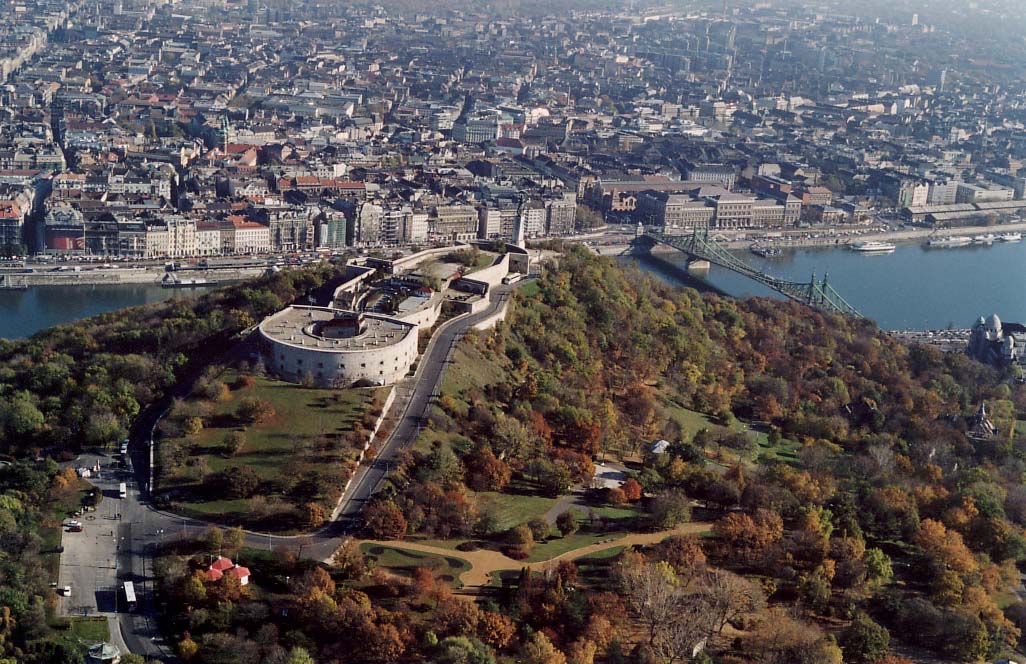
Photos: Sjaak Kempe from Groningen, The Netherlands (CC BY 2.0), Sjaak Kempe from Groningen, The Netherlands (CC BY 2.0), György Klösz (Public domain), via Wikimedia Commons
Go, ideally at sunset. This is the best wide view of Budapest, full stop, with both banks and every bridge in one frame, and the hilltop and viewpoints are free. The reopened fortress with its park and glass bridge is a nice bonus. Just respect the climb: it is steep, shadeless in summer, and not the move in flip-flops or peak heat. Take bus 27 up if the hike does not appeal.
Worth it for
- The single best panoramic view over the whole city
- Sunset and night photographers wanting the lit bridges and Parliament
- Active travelers happy to climb, or anyone pairing it with the Gellért Baths
You can skip if
- Steep uphill walking is a problem and you would rather not take the bus up
- It is a sweltering summer midday with no interest in the climb or the heat
Tickets & tours for Gellért Hill and the Citadella
Which ticket should you buy?
What it is
Gellért Hill rises about 230 meters above the Danube on the Buda side, named for Saint Gerard, a bishop said to have been killed here in the 11th century. At the top sits the Citadella, a fortress the Habsburgs built in the 1850s to keep watch over the city after the 1848-49 revolution. It was never really used as intended and now stands as a viewpoint and monument complex.
Crowning it all is the Liberty Statue (Szabadság-szobor), a roughly 14-meter bronze woman holding a palm leaf, set on the hilltop in 1947. She is visible from much of the city and is the landmark you are aiming for. After a long renovation, the fortress reopened in spring 2026 with new walking paths, an eco-park, observation terraces, and a glass bridge.
What to see
The view is the whole reason to climb. From the terraces you get the full panorama: the Danube curving through the city, the Chain Bridge and the others, Parliament across the water, Castle Hill, and Pest spread out flat behind it. Sunset and the post-dusk hour, when the bridges and Parliament light up, are spectacular and worth timing for.
On the way up or down, detour to the Gellért Hill Cave (a church built into the rock) and the Cave Chapel near the base, and to the small waterfall and statue of Saint Gerard on the Pest-facing slope. The renovated complex up top now has a free internal park, restored terraces, the new glass pedestrian bridge, and an exhibition inside the fortress on Hungary's freedom struggles.
Getting there and access
There is no metro to the summit; you walk up. Several footpaths climb from the river: a common approach starts near the Gellért Baths or the Liberty Bridge (Szabadság híd) and zigzags up through the park, taking roughly 20 to 30 minutes at a steady pace. Buses 27 from Móricz Zsigmond körtér get you much of the way up to near the top if you want to skip most of the climb, then it is a short final walk.
The hill and its viewpoints are free and open. The renovated Citadella includes a free public park and terraces; the indoor exhibition inside the fortress is a separate paid attraction. Paths are steep and uneven in places, so wear real shoes, and in summer carry water and expect little shade on the climb.
Gellért Hill and the Citadella: FAQs
Yes. After about eleven years closed for renovation, the Citadella on Gellért Hill reopened in spring 2026, with restored terraces, a free public park, a new glass pedestrian bridge, and a paid indoor exhibition inside the fortress.
The hill, the viewpoints, the Liberty Statue, and the renovated public park are free and open. The indoor exhibition inside the fortress charges separate admission.
Moderate. From the river it is roughly a 20 to 30 minute uphill walk on steep, sometimes uneven paths. Wear proper shoes, and in summer bring water since there is little shade.
Mostly. Bus 27 from Móricz Zsigmond körtér climbs much of the hill, leaving a short final walk to the top. There is no metro or funicular to the summit.
Sunset and the hour after, when Parliament, the bridges, and the riverbanks light up. Late morning is good for clear daytime photos. Avoid the steep climb in the midday summer heat.
The Gellért Hill Cave and Cave Chapel built into the rock near the base, the Saint Gerard statue and waterfall, and the Gellért Baths at the foot of the hill. Easy to combine.
Explore more in Budapest
Plan your trip
- Best time to visit Budapest
- Day trips from Budapest
- One day in Budapest: the Pest core and a Buda hill at golden hour
- Two days in Budapest: the monuments first, then a slower day with a bath
- Three days in Budapest: landmarks, baths, and one day to slow down
- Budapest with kids: what actually keeps them happy
- Budapest at night: the lights, the baths, the ruin bars
- Budapest when it rains: warm water, grand rooms, good coffee
- Szechenyi vs Rudas Baths: Which Budapest Soak Is Right for You?
- Fisherman's Bastion vs Gellert Hill: Best View in Budapest?
- Danube Cruise: Day vs Night in Budapest. Which Is Worth It?
Where to next?
One short email, twice a month: handpicked experiences, hidden-gem cities, and the best windows to book them.